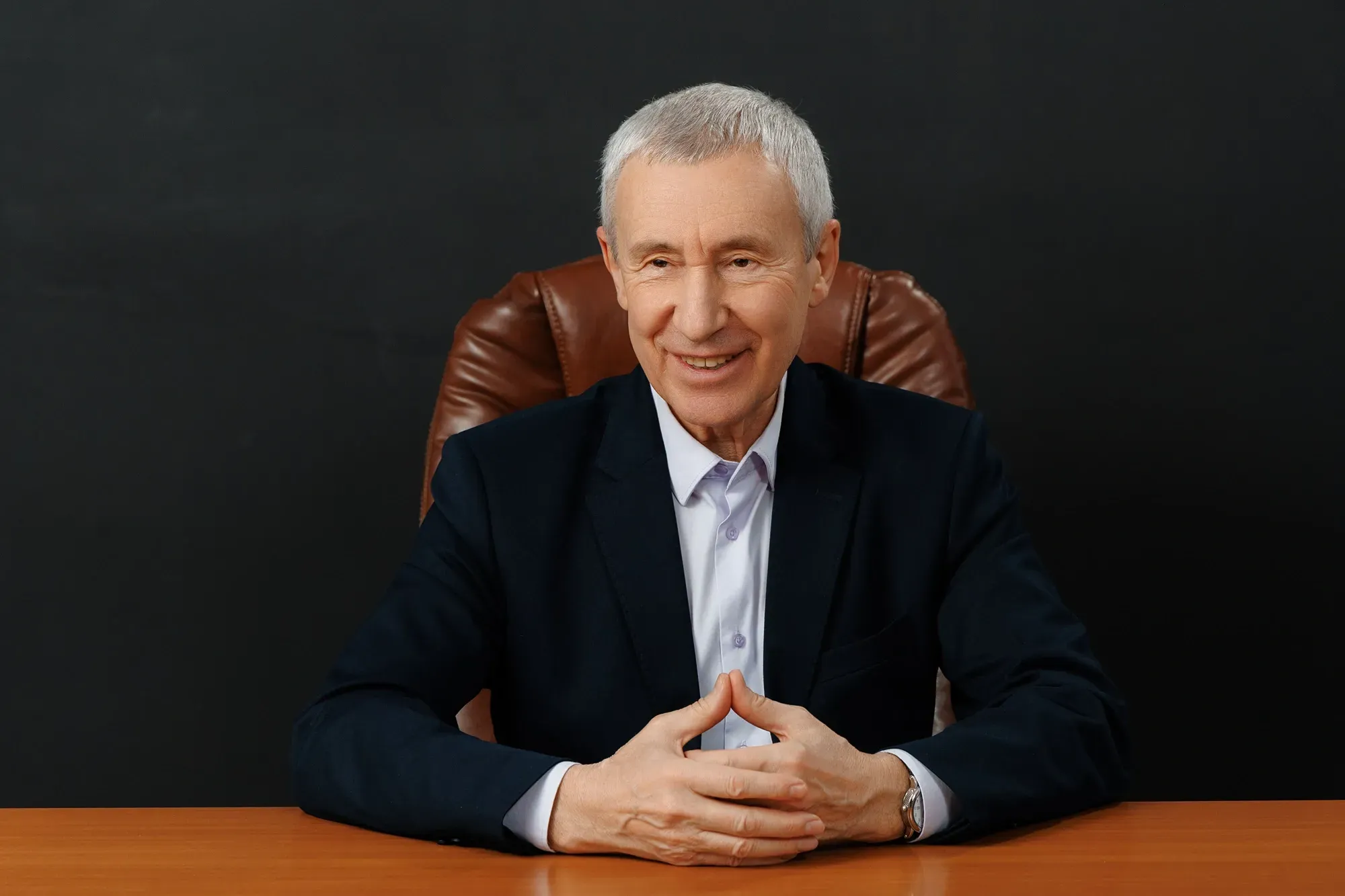
Autobiography
Preface
Doctor of Economics, Honorary Professor of Perm State University, Deputy of the State Duma of the Russian Federation of the III, IV, V and VI convocations (from the Perm Region and the Territory), Member of the Federation Council, Senator from the Perm Territory 2012-2025, Member of the Bureau of the Supreme Council of the United Russia party (since 2021), Deputy Chairman of the International Commission of the General Council of United Russia (Chairman S.V. Lavrov), Deputy Chairman of the World Anti-Neocolonial Movement "For Freedom of Nations!" (Chairman D.A. Medvedev), Member of the Russian Council on Foreign and Defense Policy (SVOP). Member of the Bureau of the Standing Committee of the International Conference of Asian Political Parties (ICAPP), member of the Union of Writers of Russia, coordinator of the Russian parliamentary "Eurasian Dialogue", Honorary Professor of Perm State (Classical) University (PSNU).
Childhood
I was born on November 9, 1954, in the USSR, in the Leninsky district of Perm (then the city of Molotov), shortly after the death of Joseph Stalin. At the insistence of my grandmother, Anfisa Alekseyevna, I was secretly baptized immediately after birth (so as not to damage my father's communist reputation) in the local Orthodox church.
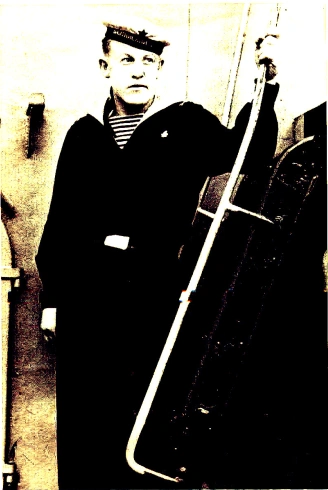
My father, Arkady Dmitrievich Klimov
My father, Arkady Dmitrievich Klimov, was born in a small village in the north of our region. He later moved with his parents to Perm, where he attended the same class as my future mother, Elena Stepanovna, née Kazakova.
At the end of the Great Patriotic War, my father decided to join the navy, becoming a cabin boy in the Northern Fleet. He served in Kronstadt. As a naval sailor, Arkady Klimov entered Königsberg after it was liberated from the Nazis. He also visited post-war Germany and Holland. After seven years of service, he entered the Leningrad Institute, specializing in radio engineering. Returning to Perm, my father reunited with my mother, who had by then graduated from the Chemistry Department of Perm State University. My future parents married there in Perm, and I became their firstborn. Four years later, my brother, Sergei, was born.
At the end of the Great Patriotic War, my father decided to join the navy and become a cabin boy.
My brother and I attended different schools and different universities, although we spent almost all of our time growing up, as they say, under the same roof, in a small two-room apartment, not far from a large defense plant, known today for its production of aircraft engines and space rocket engines.
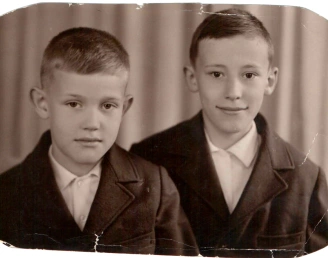
My brother and I
The beginning of a career
After graduating from the economics department of Perm State University, I landed a position in the Perm Regional Department of Rural Construction. The next two years were spent on nonstop business trips throughout the Western Urals. It was then that I truly learned what real production is like, what goes on in factory workshops, construction sites, and motor depots, not only in the regional capital but also in the most remote corners of the Kama region.
Having won a serious competition for the right to continue my economic education, I found myself in a Moscow graduate school and three years later, at the age of 26, I became a candidate of economic sciences.
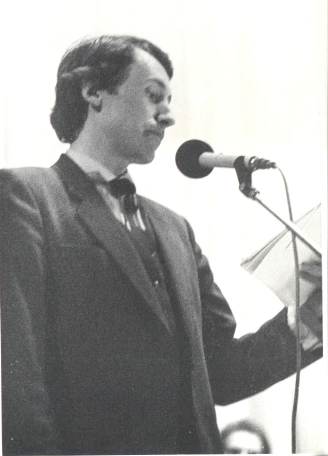
I hosted a program on local television
While still a student, I became interested in journalism, writing short stories and feuilletons. I contributed to various publications, both regional and national, and hosted a program on local television. These skills later proved very helpful in my work and life.
After completing my postgraduate studies in Moscow, I returned to Perm, to my beloved economics department, as a regular lecturer, and within a few years, I became the head of a department at Perm State University.
I married Olga Timofeeva, a foreign language teacher from Balashov, on March 1, 1985, and we have been together for over forty years.
By that time, the country had undergone enormous changes. Gorbachev's "perestroika," which replaced Brezhnev's "stagnation" and the subsequent "five-year plan for the burial" of the aging leaders of the CPSU, not only brought about a market economy and destroyed the monopoly of the Communist Party of the Soviet Union, but also created new, serious problems for our Fatherland and people.
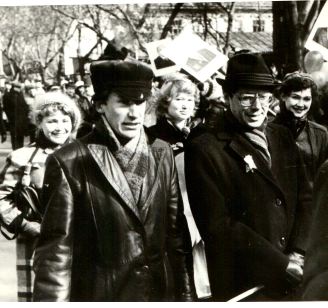
Gorbachev's "perestroika" replaced Brezhnev's "stagnation"
In March 1990, the first alternative elections to the regional Council of People's Deputies were scheduled to take place. My colleagues at the faculty invited me to participate, and I became a deputy for the first time.
A year later, after a failed coup attempt, the Union of Soviet Socialist Republics collapsed. Russia became an independent state.
But three years later, President Boris Yeltsin dissolved all the Councils, declaring them "incompatible with democracy." New governing bodies—legislative assemblies—were formed in the regions. In the 1994 elections, I was again elected by the residents of Perm as a regional deputy, and then re-elected in 1998. Throughout these years, my colleagues in the regional parliament elected me as the Chairman of the Regional Policy Committee.
But the Councils of those years lasted only three years. President Boris Yeltsin decided to dissolve all the Councils after 1993, declaring them "incompatible with democracy." New governing bodies—legislative assemblies—were formed in the regions. In the 1994 elections, I was again elected by the residents of Perm as a regional deputy, and then re-elected in 1998. Throughout these years, my colleagues in the regional parliament elected me as Chairman of the Committee on Regional Policy.
Political career
While still a member of the first convocation of the regional Legislative Assembly, I began to frequently visit the Komi-Permyak Autonomous Okrug, which at that time was considered an independent subject of the Russian Federation but was facing extremely serious social and economic problems. It was during these trips that a program for the okrug's revival and its possible reintegration with the Perm Region was formulated, and the okrug's residents invited me to run for the State Duma from their territory.
Thus, in December 1999, I became a member of the Russian parliament for the first time. In the State Duma, I was accepted into the group of independent deputies led by O. Morozov (Regions of Russia - Union of Independent Deputies). I also joined the Committee on Federation Affairs and Regional Policy. Just a month after my election to the State Duma, I was asked to become one of Vladimir Putin's trusted representatives in his first presidential election.
It should be noted that in the 1990s, I headed various commercial and non-profit organizations, including a private research center, the Interdisciplinary Institute of Regional Studies (MIRI). However, immediately after being elected to the State Duma in 1999, in accordance with the law, I resigned from all commercial organizations and transitioned to professional parliamentary work.
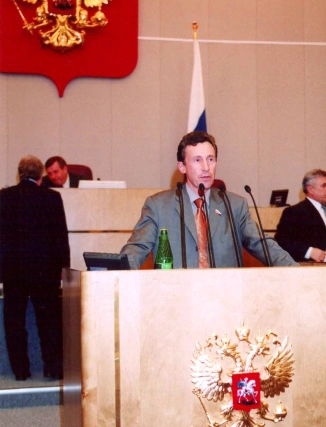
Became a member of the Russian parliament for the first time
In December 2003, the residents of the Komi-Permyak Okrug re-elected me as their deputy. From that time on, I began participating in the work of the Russian Council on Foreign and Defense Policy (CFDP) and became actively involved in parliamentary diplomacy.
In 2006, at the suggestion of K. Kosachev, Chairman of the International Affairs Committee (IAC), I transferred to this Committee, where I oversaw the European dimension. At the same time, I was completing my dissertation for a Doctor of Economics degree. I defended my dissertation a year later at the Institute for Systems Analysis of the Russian Academy of Sciences.
By 2007, electoral legislation in the country had changed. Now, all State Duma deputies had to be elected from party lists. At that time, I agreed to participate in the elections on the United Russia party list (by then, I was a member of the leadership of the United Russia faction in the State Duma). This step was also logical for me because Vladimir Putin, a man whose trusted confidant I had been since 2000, had become the party's leader.
Following the December 2007 elections, I was re-elected to the State Duma (on the United Russia regional list for Perm Krai) and became Deputy Chairman of the Duma Committee, as well as Deputy Chairman of the International Affairs Committee of the All-Russian Political Party United Russia. Since 2008, I have been Co-Chair of the Russia-EU Parliamentary Cooperation Committee (RCC) and Head of the Permanent Russian Parliamentary Delegation to the European Parliament.
In 2012, with my direct involvement, a public project was launched – the Russian parliamentary "Eurasian Dialogue," of which I currently serve as Coordinator.
Since July 2012, he has represented the Governor of Perm Krai in the Federation Council, where he served as Deputy Chairman of the International Affairs Committee until September 2025. From 2017 to 2025, he also served as Chairman of the Senate Committee for the Protection of State Sovereignty of Russia. In November of that year, he became a member of the Standing Committee of the International Conference of Asian Political Parties (ICAPP), and subsequently joined the Bureau of this influential international organization.
From 2012 to 2016, he was a member of the Presidium of the General Council of the All-Russian political party United Russia, where he oversaw the party's international activities. He then served as an advisor to B.V. Gryzlov, Chairman of the Supreme Council of the party.
Now
In 2014, I was elected to the Bureau of the Standing Committee on Peace and Security of the Inter-Parliamentary Union (IPU), the oldest parliamentary organization (founded in 1889).
In March 2015, I was appointed head of the subcommittee on inter-parliamentary cooperation with BRICS countries under the Foreign Affairs Committee of the Federation Council.
Since 2021, I have been a member of the Bureau of the Supreme Council of United Russia.
Since September 24, 2025, following the end of my five-year term, I have fully transitioned to party and public work, while maintaining my international focus and ties to my native region, which has been and remains my small homeland, where I live with my family, continuing to work in Moscow, as I have for decades, on a rotating basis, while remaining permanently registered in Perm.
My total length of uninterrupted service in the federal parliament has amounted to over a quarter of a century. I have also worked continuously with the United Russia party since its founding in 2001.
I have received government awards, including the Order of Honor, the Order of Friendship, the Order of Alexander Nevsky, and a letter of gratitude from the President of the Russian Federation.
Автобиография
Preface
Doctor of Economics, Honorary Professor of Perm State University, Deputy of the State Duma of the Russian Federation of the III, IV, V and VI convocations (from the Perm Region and the Territory), Member of the Federation Council, Senator from the Perm Territory 2012-2025, Member of the Bureau of the Supreme Council of the United Russia party (since 2021), Deputy Chairman of the International Commission of the General Council of United Russia (Chairman S.V. Lavrov), Deputy Chairman of the World Anti-Neocolonial Movement "For Freedom of Nations!" (Chairman D.A. Medvedev), Member of the Russian Council on Foreign and Defense Policy (SVOP). Member of the Bureau of the Standing Committee of the International Conference of Asian Political Parties (ICAPP), member of the Union of Writers of Russia, coordinator of the Russian parliamentary "Eurasian Dialogue", Honorary Professor of Perm State (Classical) University (PSNU).
Childhood
I was born on November 9, 1954, in the USSR, in the Leninsky district of Perm (then the city of Molotov), shortly after the death of Joseph Stalin. At the insistence of my grandmother, Anfisa Alekseyevna, I was secretly baptized immediately after birth (so as not to damage my father's communist reputation) in the local Orthodox church.
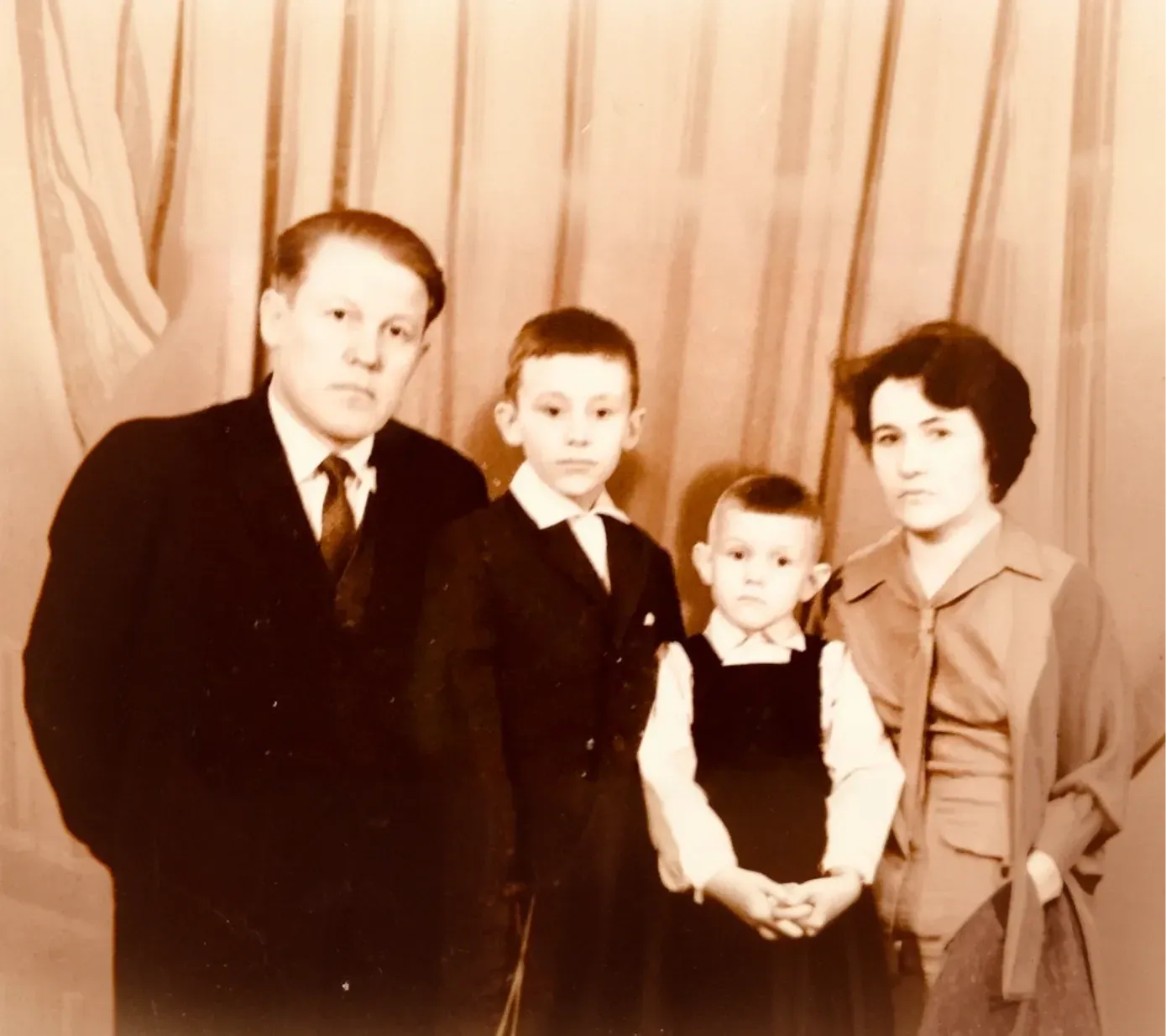
My father, Arkady Dmitrievich Klimov
My father, Arkady Dmitrievich Klimov, was born in a small village in the north of our region. He later moved with his parents to Perm, where he attended the same class as my future mother, Elena Stepanovna, née Kazakova.
At the end of the Great Patriotic War, my father decided to join the navy, becoming a cabin boy in the Northern Fleet. He served in Kronstadt. As a naval sailor, Arkady Klimov entered Königsberg after it was liberated from the Nazis. He also visited post-war Germany and Holland. After seven years of service, he entered the Leningrad Institute, specializing in radio engineering. Returning to Perm, my father reunited with my mother, who had by then graduated from the Chemistry Department of Perm State University. My future parents married there in Perm, and I became their firstborn. Four years later, my brother, Sergei, was born.
At the end of the Great Patriotic War, my father decided to join the navy and become a cabin boy.
My brother and I attended different schools and different universities, although we spent almost all of our time growing up, as they say, under the same roof, in a small two-room apartment, not far from a large defense plant, known today for its production of aircraft engines and space rocket engines.
My brother and I
The beginning of a career
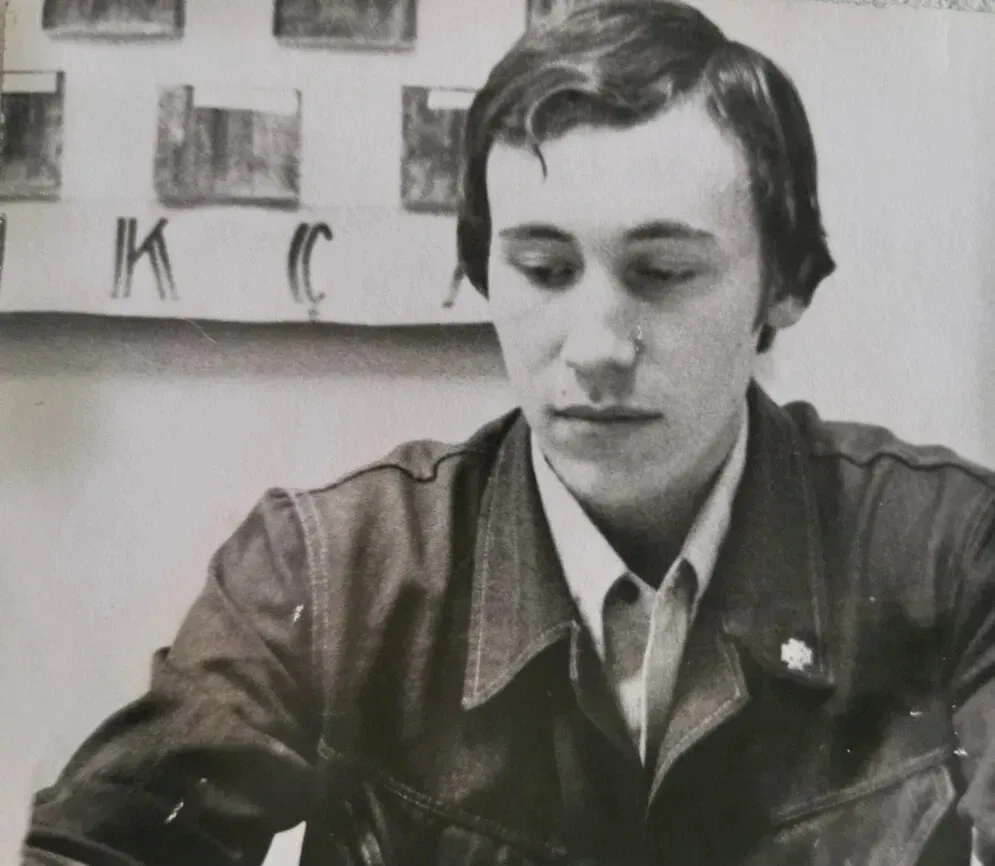
After graduating from the economics department of Perm State University, I landed a position in the Perm Regional Department of Rural Construction. The next two years were spent on nonstop business trips throughout the Western Urals. It was then that I truly learned what real production is like, what goes on in factory workshops, construction sites, and motor depots, not only in the regional capital but also in the most remote corners of the Kama region.
Having won a serious competition for the right to continue my economic education, I found myself in a Moscow graduate school and three years later, at the age of 26, I became a candidate of economic sciences.
I hosted a program on local television
While still a student, I became interested in journalism, writing short stories and feuilletons. I contributed to various publications, both regional and national, and hosted a program on local television. These skills later proved very helpful in my work and life.
After completing my postgraduate studies in Moscow, I returned to Perm, to my beloved economics department, as a regular lecturer, and within a few years, I became the head of a department at Perm State University.
I married Olga Timofeeva, a foreign language teacher from Balashov, on March 1, 1985, and we have been together for over forty years.
By that time, the country had undergone enormous changes. Gorbachev's "perestroika," which replaced Brezhnev's "stagnation" and the subsequent "five-year plan for the burial" of the aging leaders of the CPSU, not only brought about a market economy and destroyed the monopoly of the Communist Party of the Soviet Union, but also created new, serious problems for our Fatherland and people.
Gorbachev's "perestroika" replaced Brezhnev's "stagnation"
In March 1990, the first alternative elections to the regional Council of People's Deputies were scheduled to take place. My colleagues at the faculty invited me to participate, and I became a deputy for the first time.
A year later, after a failed coup attempt, the Union of Soviet Socialist Republics collapsed. Russia became an independent state.
But three years later, President Boris Yeltsin dissolved all the Councils, declaring them "incompatible with democracy." New governing bodies—legislative assemblies—were formed in the regions. In the 1994 elections, I was again elected by the residents of Perm as a regional deputy, and then re-elected in 1998. Throughout these years, my colleagues in the regional parliament elected me as the Chairman of the Regional Policy Committee.
But the Councils of those years lasted only three years. President Boris Yeltsin decided to dissolve all the Councils after 1993, declaring them "incompatible with democracy." New governing bodies—legislative assemblies—were formed in the regions. In the 1994 elections, I was again elected by the residents of Perm as a regional deputy, and then re-elected in 1998. Throughout these years, my colleagues in the regional parliament elected me as Chairman of the Committee on Regional Policy.
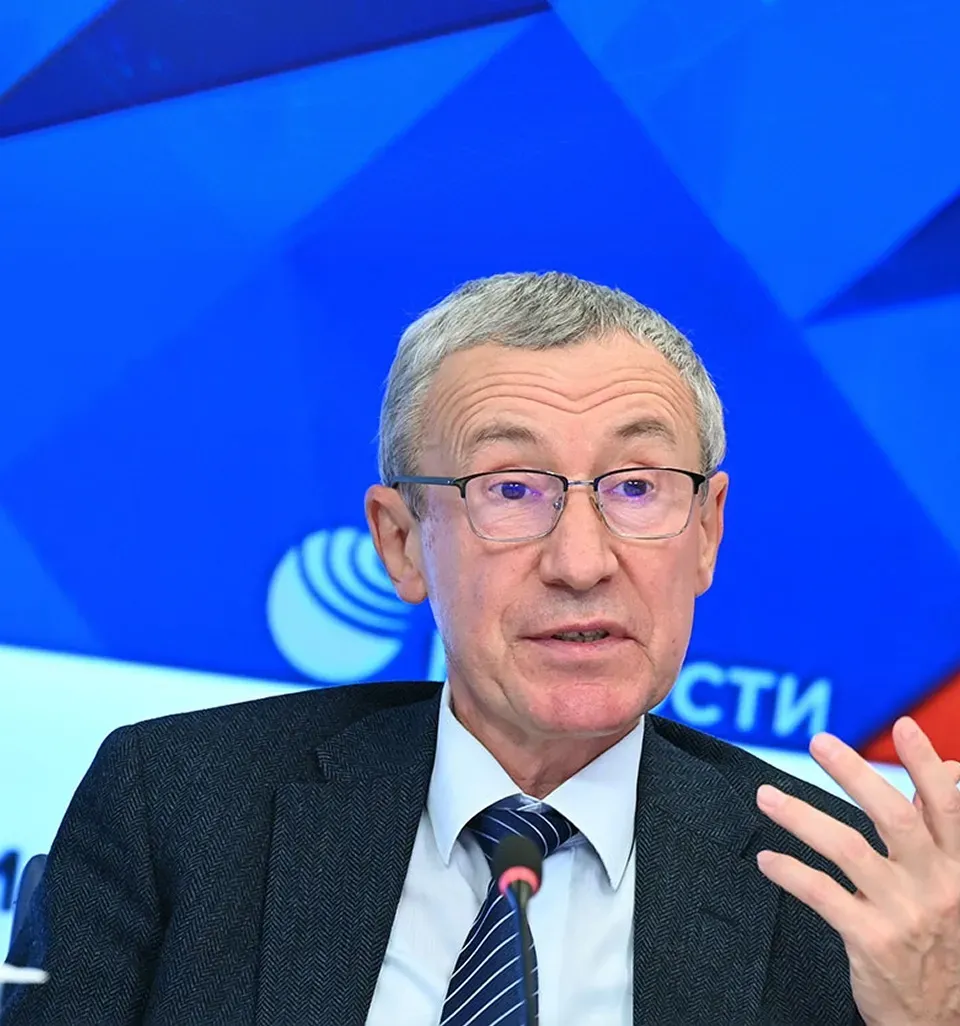
Political career
While still a member of the first convocation of the regional Legislative Assembly, I began to frequently visit the Komi-Permyak Autonomous Okrug, which at that time was considered an independent subject of the Russian Federation but was facing extremely serious social and economic problems. It was during these trips that a program for the okrug's revival and its possible reintegration with the Perm Region was formulated, and the okrug's residents invited me to run for the State Duma from their territory.
Thus, in December 1999, I became a member of the Russian parliament for the first time. In the State Duma, I was accepted into the group of independent deputies led by O. Morozov (Regions of Russia - Union of Independent Deputies). I also joined the Committee on Federation Affairs and Regional Policy. Just a month after my election to the State Duma, I was asked to become one of Vladimir Putin's trusted representatives in his first presidential election.
It should be noted that in the 1990s, I headed various commercial and non-profit organizations, including a private research center, the Interdisciplinary Institute of Regional Studies (MIRI). However, immediately after being elected to the State Duma in 1999, in accordance with the law, I resigned from all commercial organizations and transitioned to professional parliamentary work.
Became a member of the Russian parliament for the first time
In December 2003, the residents of the Komi-Permyak Okrug re-elected me as their deputy. From that time on, I began participating in the work of the Russian Council on Foreign and Defense Policy (CFDP) and became actively involved in parliamentary diplomacy.
In 2006, at the suggestion of K. Kosachev, Chairman of the International Affairs Committee (IAC), I transferred to this Committee, where I oversaw the European dimension. At the same time, I was completing my dissertation for a Doctor of Economics degree. I defended my dissertation a year later at the Institute for Systems Analysis of the Russian Academy of Sciences.
By 2007, electoral legislation in the country had changed. Now, all State Duma deputies had to be elected from party lists. At that time, I agreed to participate in the elections on the United Russia party list (by then, I was a member of the leadership of the United Russia faction in the State Duma). This step was also logical for me because Vladimir Putin, a man whose trusted confidant I had been since 2000, had become the party's leader.
Following the December 2007 elections, I was re-elected to the State Duma (on the United Russia regional list for Perm Krai) and became Deputy Chairman of the Duma Committee, as well as Deputy Chairman of the International Affairs Committee of the All-Russian Political Party United Russia. Since 2008, I have been Co-Chair of the Russia-EU Parliamentary Cooperation Committee (RCC) and Head of the Permanent Russian Parliamentary Delegation to the European Parliament.
In 2012, with my direct involvement, a public project was launched – the Russian parliamentary "Eurasian Dialogue," of which I currently serve as Coordinator.
Since July 2012, he has represented the Governor of Perm Krai in the Federation Council, where he served as Deputy Chairman of the International Affairs Committee until September 2025. From 2017 to 2025, he also served as Chairman of the Senate Committee for the Protection of State Sovereignty of Russia. In November of that year, he became a member of the Standing Committee of the International Conference of Asian Political Parties (ICAPP), and subsequently joined the Bureau of this influential international organization.
From 2012 to 2016, he was a member of the Presidium of the General Council of the All-Russian political party United Russia, where he oversaw the party's international activities. He then served as an advisor to B.V. Gryzlov, Chairman of the Supreme Council of the party.
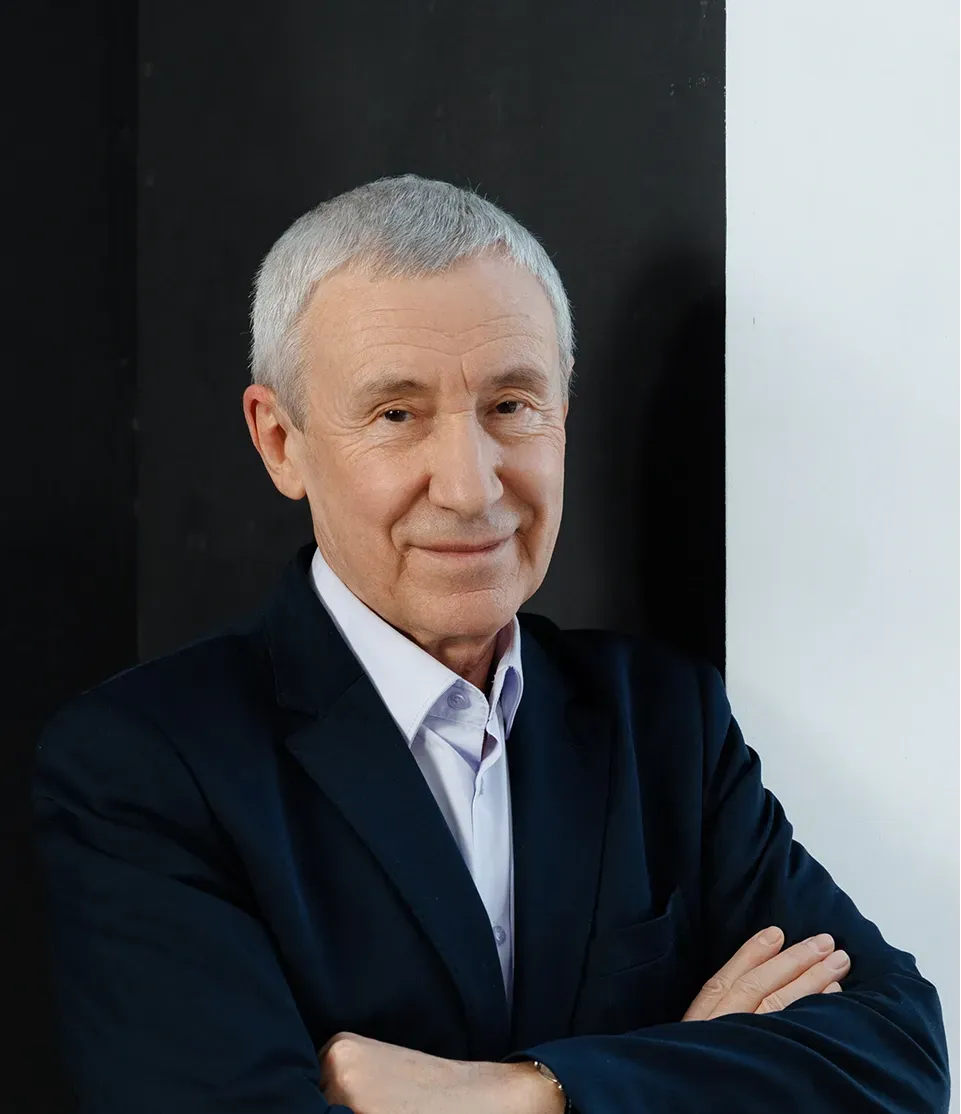
Now
In 2014, I was elected to the Bureau of the Standing Committee on Peace and Security of the Inter-Parliamentary Union (IPU), the oldest parliamentary organization (founded in 1889).
In March 2015, I was appointed head of the subcommittee on inter-parliamentary cooperation with BRICS countries under the Foreign Affairs Committee of the Federation Council.
Since 2021, I have been a member of the Bureau of the Supreme Council of United Russia.
Since September 24, 2025, following the end of my five-year term, I have fully transitioned to party and public work, while maintaining my international focus and ties to my native region, which has been and remains my small homeland, where I live with my family, continuing to work in Moscow, as I have for decades, on a rotating basis, while remaining permanently registered in Perm.
My total length of uninterrupted service in the federal parliament has amounted to over a quarter of a century. I have also worked continuously with the United Russia party since its founding in 2001.
I have received government awards, including the Order of Honor, the Order of Friendship, the Order of Alexander Nevsky, and a letter of gratitude from the President of the Russian Federation.